
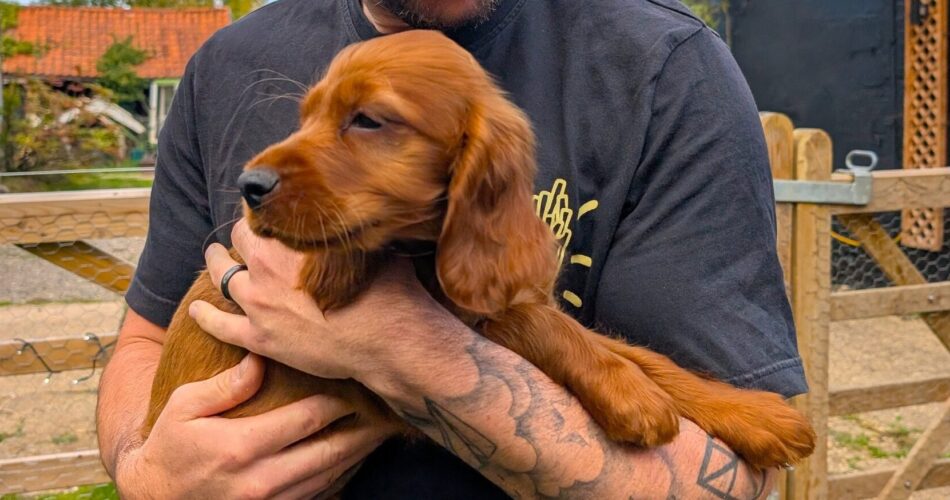
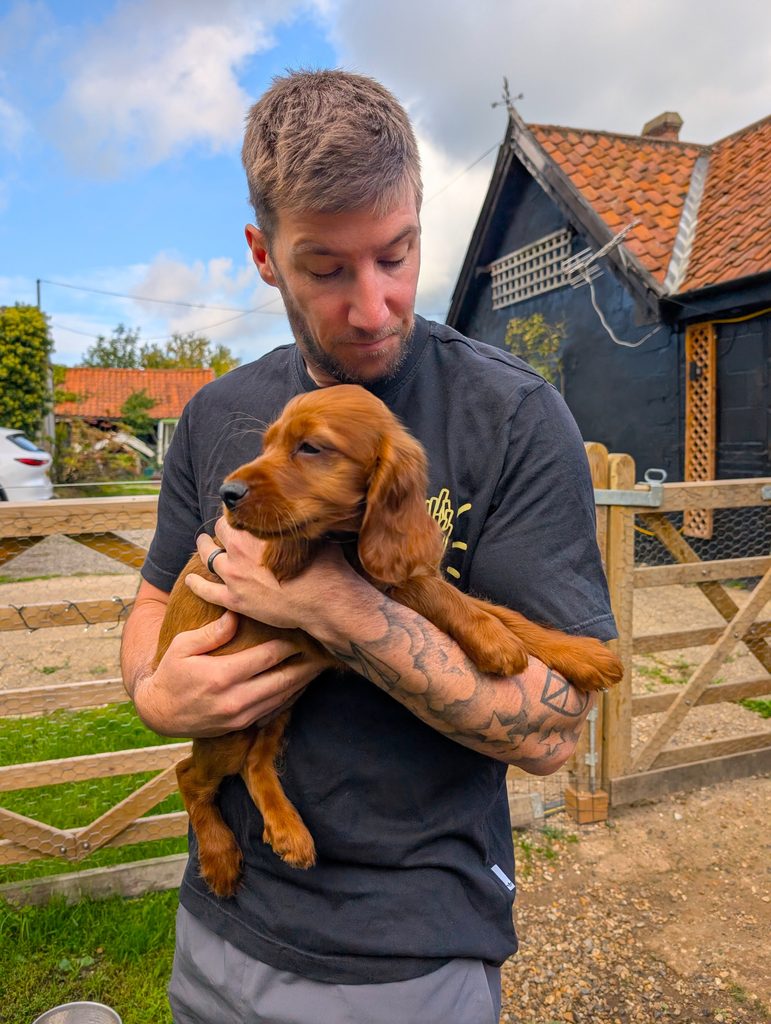
We’re about to welcome a new member to the Outdoorsy Days family – a gorgeous Irish Setter puppy called Nova, who will be joining us in just two weeks!
As a family who loves getting outdoors, exploring new places and heading off on long hikes, we can’t wait for Nova to join our adventures. We’re already imagining woodland walks, muddy paws and eventually having a four-legged companion joining us on mountain trails.
Irish Setters are known for being energetic, adventurous dogs, so we’re hoping Nova will be the perfect addition to our outdoorsy family.
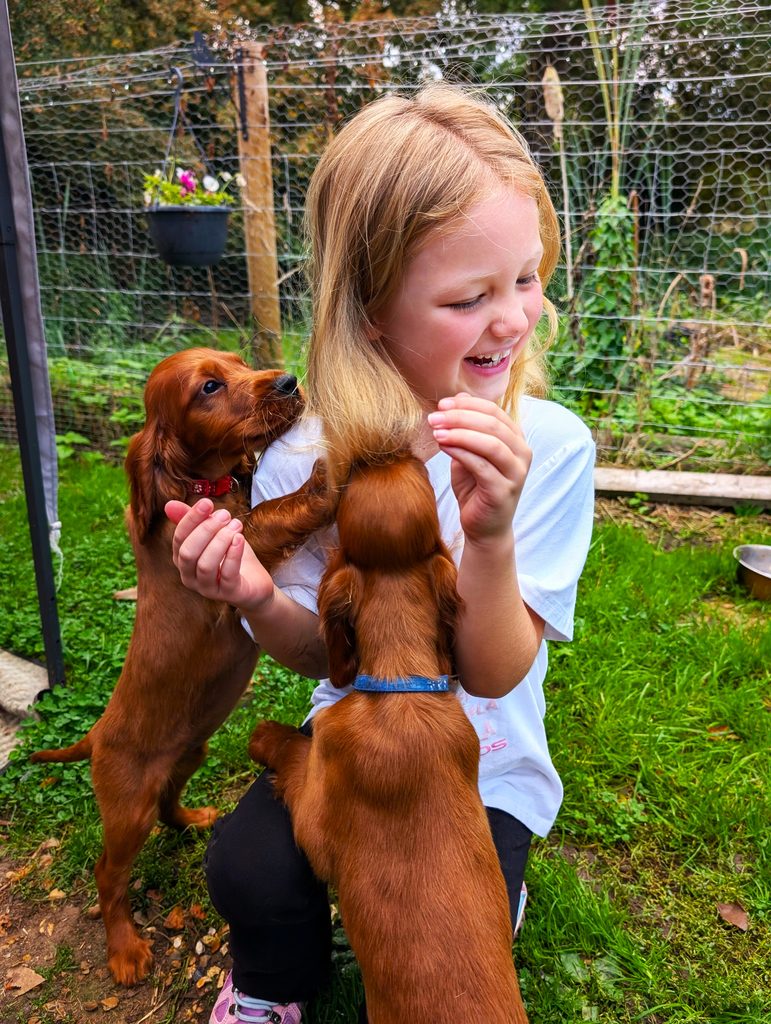
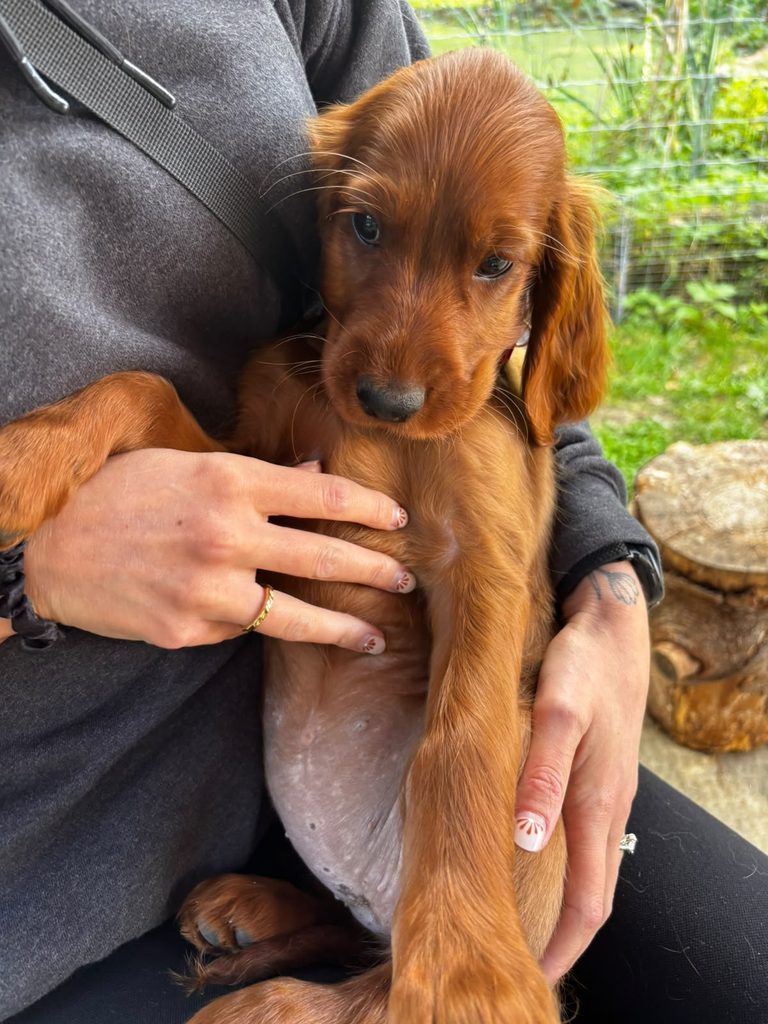
However, as excited as we are, we know that puppies can’t walk the same distances as adult dogs. Their little bodies are still developing, and too much exercise too soon can cause problems later in life.
So, we’ve been researching how far a puppy can walk at different ages, when they can start going on longer hikes and how to keep them safe as they grow. Here’s what we’ve found.
How far can a puppy walk?
The distance a puppy can safely walk depends on their age, breed, size and individual development.
You might have heard of the five-minute rule, which suggests approximately five minutes of walking per month of age, up to twice a day.
For example, a three-month-old puppy might have a 15-minute walk, while a six-month-old could manage around 30 minutes.
However, the PDSA explains that there’s no scientific evidence supporting this as a universal rule. Some puppies will comfortably manage more or less, and the type of exercise matters just as much as the duration.
It’s also important to distinguish between a relaxed sniffing walk and a demanding hike. Exploring at their own pace is very different from continuously walking several miles.
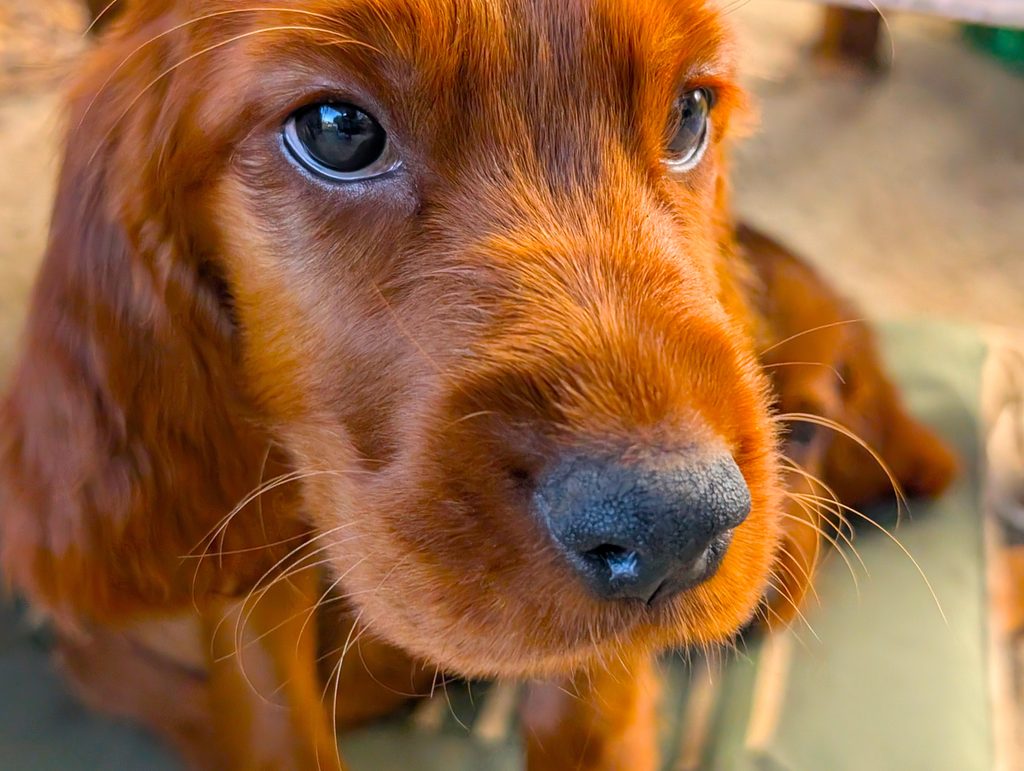
How far can an 8-week-old puppy walk?
At eight weeks old, puppies are still incredibly young and don’t need structured walks. Instead, this stage is all about introducing basic training and letting them explore the house and garden.
At this age, short bursts of gentle play and exploration are generally enough. Most eight-week-old puppies also haven’t completed their vaccinations, so public walks may not yet be safe.
However, that doesn’t mean your new pup has to miss out on adventures entirely! You can carry them outside to introduce them to new sights, sounds and smells without putting he or she on potentially contaminated ground.
How far can a 3-month-old puppy walk?
By three months, many puppies are becoming increasingly curious and energetic.
Using the traditional five-minute guideline, a three-month-old puppy might have walks of around 15 minutes at a time, once or twice daily.
However, this isn’t a strict target. A relaxed walk involving plenty of sniffing and stopping is ideal.
Some puppies may also still be waiting for their vaccinations to provide sufficient protection, so it’s important to follow veterinary advice before walking in public places.
When Nova first comes home at 12 weeks old, our focus will be about introducing her to the outdoors rather than covering any particular distance.
How far can a 4-month-old puppy walk?
At four months old, puppies are usually becoming more confident on their feet and increasingly interested in exploring.
The traditional guideline suggests approximately 20 minutes per walk, although individual needs vary. This could be a lovely age to start exploring quiet woodland paths, local parks and other gentle routes.
We’ll be choosing relatively flat walks with plenty of opportunities for Nova to stop, sniff and rest. Rather than focusing on reaching a destination, we’ll let her enjoy discovering the world around her.
How far can a 5-month-old puppy walk?
A five-month-old puppy may be ready for slightly longer adventures, with the five-minute guideline suggesting around 25 minutes per walk. However, this is also an age when puppies can become particularly enthusiastic, sometimes wanting to keep going even when they’re tired.
Given that Irish Setters are such energetic dogs, we suspect Nova might be particularly keen to keep exploring!
We’ll be watching for signs of fatigue, including slowing down, sitting frequently or becoming reluctant to continue. It’s important to remember that an energetic puppy isn’t necessarily physically ready for a long walk.
How far can a 6-month-old puppy walk?
At six months old, the traditional guideline suggests walks of around 30 minutes at a time.
By now, many puppies will have developed better coordination and confidence, making gentle countryside walks more enjoyable. However, their bones and joints are still developing.
As a larger, active breed, Nova will still have plenty of growing to do at six months old. We’ll continue avoiding demanding hikes, steep climbs and long distances, even if she seems full of energy. Instead, we’ll gradually introduce different environments, including woodland paths, fields and gentle hills.
How far can a 9-month-old puppy walk?
By nine months, some puppies can manage longer walks, but their exercise requirements vary considerably depending on their breed and development.
Smaller breeds may be approaching physical maturity, while larger dogs, including Irish Setters, can have plenty of growing left to do.
This is when we’ll hopefully start building towards some of our favourite countryside adventures with Nova. However, we won’t automatically increase walking time based on age alone. We’ll take advice from our vet and gradually build her fitness.
How far can a 12-month-old puppy walk?
At 12 months old, some dogs are physically mature and may be ready to build towards longer walks. However, larger breeds can take 18–24 months to reach full maturity, although this varies between individual dogs.
As an Irish Setter, Nova may still be developing at a year old, so we won’t assume she’s ready for a mountain hike or a full day of walking simply because she’s reached her first birthday.
We’ll be checking that she’s physically ready before increasing the distance or difficulty of our adventures.
When can a puppy go on long hikes?
This is probably the question we’re most interested in!
We’d love Nova to eventually join us on longer hikes, whether that’s exploring the Peak District, tackling mountain trails in Wales or discovering new routes closer to home.
Irish Setters were originally bred as active sporting dogs, and adult dogs typically enjoy plenty of exercise. However, their enthusiasm doesn’t mean they’re ready for strenuous hikes while they’re still growing.
The PDSA recommends avoiding long walks, hikes and running until dogs are fully grown. Even then, fitness needs to be built gradually. Just like humans, dogs need time to develop stamina.
Our plan is to start with short, gentle walks and slowly progress towards longer countryside routes once Nova is physically mature.
What are the risks of walking a puppy too far?
Puppies have developing bones, joints and growth plates, which can be vulnerable to excessive or high-impact exercise.
Overdoing things may increase the risk of:
- Joint and bone injuries
- Damage to developing growth plates
- Pain and discomfort
- Problems associated with excessive strain on growing joints
- Exhaustion and overheating
The PDSA also warns that some damage might not produce obvious symptoms immediately.
This is why we’ll be cautious rather than assuming Nova is fine simply because she’s still excited to keep walking.
Our plans for future adventures with Nova
We can’t wait to introduce Nova to everything we love about the outdoors. From gentle woodland walks around Warwickshire to exploring the countryside and, eventually, tackling some of our favourite hiking trails, we’re looking forward to sharing so many adventures with her.
And with an energetic Irish Setter joining the family, we suspect she’ll be just as enthusiastic about getting outdoors as we are! But for now, we’re reminding ourselves that there’s no rush.
The first few months will be about building Nova’s confidence, enjoying new experiences and letting her grow at her own pace.
Those long hikes can wait. We’ve got years of adventures ahead of us!
Disclaimer: We’re sharing what we’ve discovered while researching exercise for Nova, rather than offering professional veterinary advice. Every puppy is different, so always speak to your vet about suitable exercise, vaccinations and when your dog is ready for longer walks.