If you’ve ever planned a family walk and wondered “how far can my child actually manage?” – you’re definitely not alone. It’s one of the biggest questions when heading outdoors with kids, and the answer isn’t always straightforward.
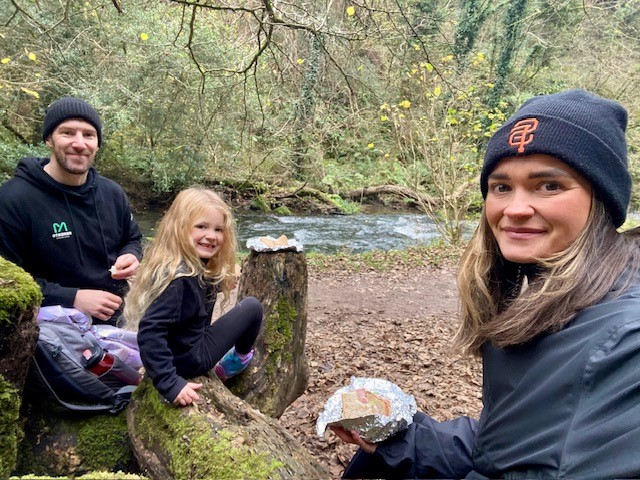
Before we get into it, a quick note: I’m by no means an expert or a health professional. This is simply based on our own experiences getting outdoors as a family, especially hiking with our 6-year-old daughter over the past few years. Every child is different, and what works for one might not work for another – but hopefully this gives you a realistic starting point.
Because the truth is, it’s not just about distance. It’s about mood, snacks, terrain, motivation, and whether you accidentally timed your walk right before a meltdown.
Why distance isn’t the whole story
When it comes to kids and walking, distance is only part of the picture. A flat, interesting 3km woodland trail can feel easy and fun, while a 1.5km uphill climb on a windy day can feel like a marathon (for everyone involved).
Whether you’re climbing mountains or hiking near London, things like incline, terrain, and how engaging the walk is play a huge role. A path with puddles, sticks to collect, or animals to spot will always go down better than a long, straight gravel track with nothing to see.


From our experience, the biggest factor isn’t physical ability- it’s motivation.
How far can a toddler walk? (Ages 2–4)
At this age, walking is still very much on their terms. Some days they’ll surprise you, and other days they’ll refuse to walk 100 metres.
Realistically, you’re looking at around 0.5 to 1.5 km of actual walking, often broken up with plenty of stops, snacks, and carrying. Flat routes work best, and anything with a steady incline can quickly become a struggle.
The key here is keeping things short and interesting. Woodland trails are perfect, especially if there are things to interact with – sticks, leaves, puddles, or even just a good patch of mud. Circular walks are also a win, as there’s a clear sense of progress without the dreaded “turning back” moment.
At this stage, it’s less about completing a walk and more about just being outside.
Young children (Ages 4–6)
This is where things start to get a bit more predictable, although still very dependent on mood. At this age, many children can manage around 2 to 4 km, especially on fairly flat terrain.
Our daughter really started to build her confidence around this age, but we quickly learned that the type of walk made all the difference. A 3km walk with things to climb, explore, or discover felt easy. The same distance on a boring path? Not so much.
Gentle inclines are usually fine, but anything too steep or prolonged can lead to tired legs (and complaints). Breaking the walk into “sections” helps – whether that’s snack stops, mini goals, or just saying “let’s get to that tree.”
This is also a great age to start introducing simple challenges or games to keep things engaging.
Older children (Ages 6–8)
From our own experience with a 6-year-old, this is where things really open up. With the right motivation, kids in this age range can often handle 4 to 6 km, sometimes more if the walk is engaging and the conditions are right.
Inclines become much more manageable, although long, steep climbs can still be tough. We’ve found that steady uphill sections are fine if there’s a reward at the top – whether that’s a view, a snack, or just the excitement of reaching a “summit.”
One of our favourite memories was climbing Mam Tor for the first time. We’d secretly bought Indie a medal to give her at the top, and honestly, that moment made the whole experience. She was so excited to receive it, and it instantly became part of the story of that day. It even made its way into school for show and tell the following Monday, which just shows how much it meant to her.
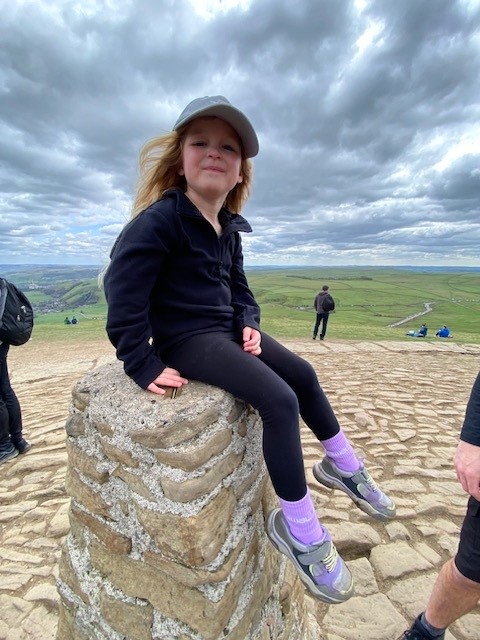

At this age, kids really respond to that sense of achievement. Having something tangible – whether it’s a medal, a photo at the top, or even just a big cheer – can turn a walk into something they’re genuinely proud of.
Older kids (Ages 8–12)
By this stage, many kids can handle distances of 6 to 10 km, especially if they’re used to walking regularly. Their stamina improves, and they’re better able to manage varied terrain, including steeper inclines.
That said, it still depends heavily on the child and the situation. A long uphill hike might be physically manageable, but mentally draining if there’s nothing to break it up.
At this age, involving them in the plan can make a big difference. Letting them help choose the route or decide where to stop can increase motivation and make them feel more invested in the day.
Walks with variety – different landscapes, interesting features, or places to explore—tend to work best.
What keeps kids motivated on a walk
No matter the age, motivation is everything. From our experience, a few simple things can completely change how a walk goes.
Snacks are an obvious one, but they really do work. Regular breaks with something to eat can reset moods and keep energy levels up. We’ve also found that having a “treat stop” at the end—like a café or picnic—gives everyone something to look forward to.
Turning the walk into an adventure helps too. Whether it’s a scavenger hunt, spotting wildlife, or simply letting kids lead the way for a while, giving them a sense of purpose makes a big difference.
And sometimes, it’s those little extras – like a surprise reward or a special moment at the end—that stick with them long after the walk is over.
Being realistic (and kind to yourself)
It’s easy to feel like you should be doing longer walks or more “impressive” hikes, especially when you see what other families are doing. But in reality, every family is different, and every child has their own pace.
Some of our best days outdoors have been short, simple walks with plenty of stops along the way. It’s not always about the distance – it’s about the experience.
Over time, kids naturally build stamina and confidence. What feels like a stretch one year often becomes easy the next.
More than anything, it’s about finding what works for your family, choosing walks that suit your child’s abilities, and keeping things enjoyable.
Because at the end of the day, those little outdoor adventures – no matter how far you go – are what really matter. Our next challenge is to master the bike without stablisers!